
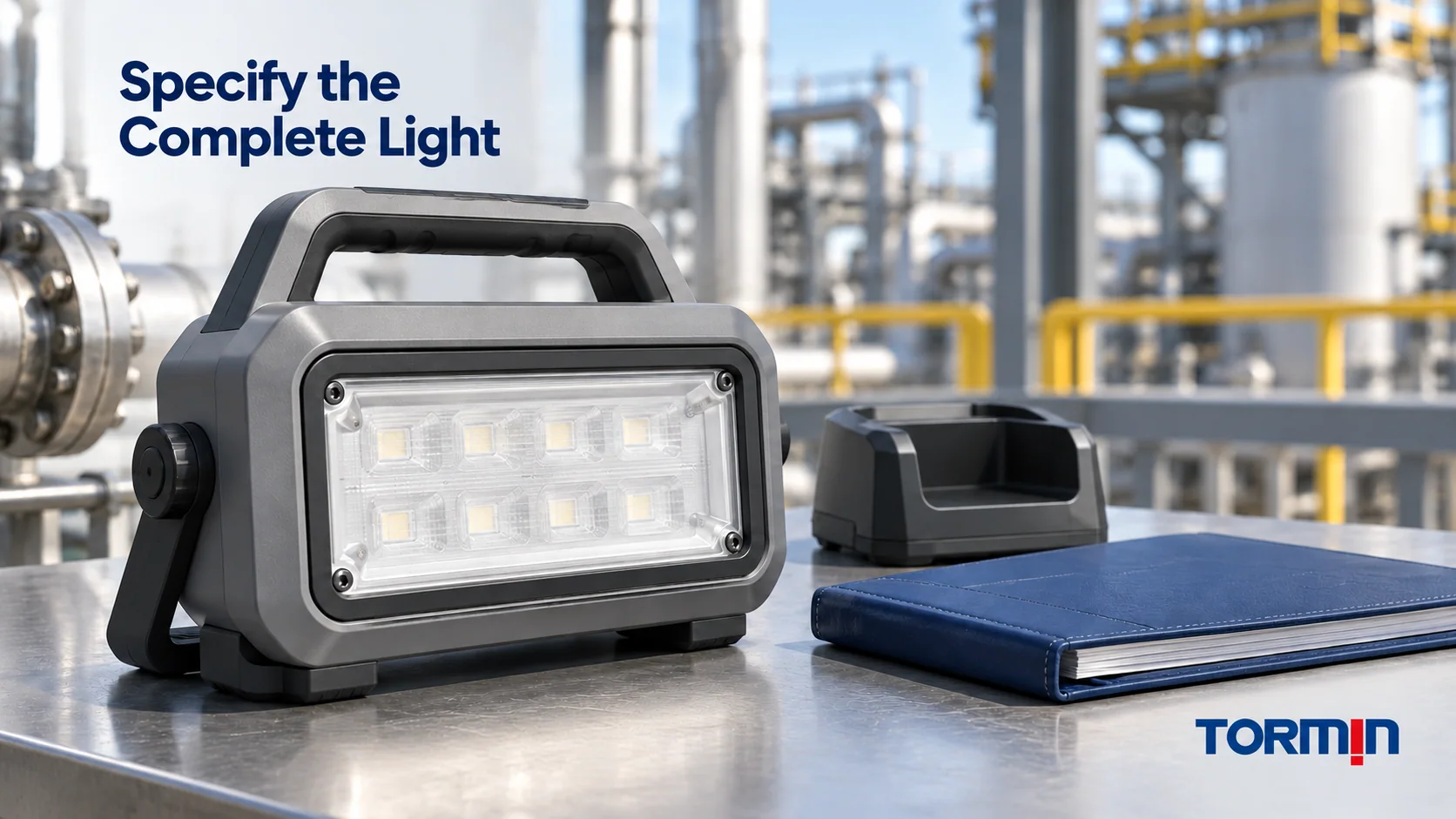
Intrinsic safety controls ignition-capable electrical and thermal energy; explosion-proof enclosure protection contains an internal explosion without igniting the specified surrounding atmosphere. A portable light can combine protection methods. Specify the complete documented light, its battery and accessories, and the conditions permitted for each use state. A battery supply or rugged housing alone does not establish either protection method.
For a buyer reviewing two portable-light offers, the useful question is: what exactly has been assessed, and does that configuration cover the way this light will be used? A short comparison of protection principles helps, but the purchasing decision needs evidence for the finished equipment and its permitted operating conditions.
What the two terms mean in a portable-light specification
Intrinsic safety is itself a method of explosion protection. In IEC terminology, protection by intrinsic safety is identified by i, with levels such as ia, ib and ic. Its assessment considers the circuits and components that control available energy, including energy stored in batteries. Low nominal voltage is only one characteristic of a design; it is not proof of intrinsic safety.
“Explosion-proof” also appears as a broad product-category description. In US electrical rules, however, explosion-proof apparatus has a specific enclosure-based definition. For the IEC examples in this article, the enclosure protection discussed is flameproof d. These terms must be read within their own approval framework; an IEC marking does not by itself establish US approval. OSHA separately identifies protection techniques and limits their use to the locations for which the equipment is approved.
The table compares principles and evidence questions. It does not assign every portable light to one exclusive category.
| Comparison point | Intrinsic safety | Flameproof enclosure protection | What the portable-light buyer should request |
|---|---|---|---|
| Ignition-control principle | Controls electrical and thermal energy under the assessed conditions | Withstands internal ignition and prevents it from igniting the external atmosphere; external temperature also matters | The stated protection method and matching complete-equipment evidence |
| Protected scope | May apply to complete apparatus or identified circuits within equipment | Applies to the documented enclosure arrangement and its contents | Confirmation of which parts or circuits use each method |
| Configuration dependency | Energy-control components and the specified power arrangement matter | Enclosure construction and the assessed internal arrangement matter | Exact ordering variant and the battery/accessory configuration covered |
| Purchase implication | An “IS” description needs a defined scope and conditions | A metal case or “explosion-proof” sales name needs a defined approval basis | A traceable document set for the offered light, rather than a conclusion from its appearance |
The mechanism and configuration distinctions follow the IEC public scope and SGS Baseefa’s technical guidance, including its detailed flameproof guide. They do not establish any particular model’s suitability.
Protection-method names also cannot establish a universal ranking for weight, price, brightness or runtime. Compare those characteristics for the exact offered variants after their approval basis and operating conditions match the project requirement. The broader explosion-proof lighting selection guide covers the project inputs needed before that review.
A portable light can use combined protection
A documented TORMIN example shows why the comparison needs a combined-protection branch. IECEx TUR 19.0062X, Issue 1, dated 24 September 2025, covers the BW7101A/B portable searchlight and lists the gas marking Ex db ib IIC T6 Gb. Its schedule describes a flameproof enclosure and an intrinsically safe switch circuit, with a safety-barrier circuit inside the flameproof enclosure.
That is one complete equipment design using several protection techniques. The presence of ib does not make every part of the searchlight intrinsically safe. The buyer should review the complete certified arrangement instead of asking the supplier to remove one method from the description to fit an “IS versus explosion-proof” checkbox.
The same certificate issue prohibits charging the battery in a hazardous location and states that the flameproof joints are not intended to be repaired. Those are conditions for this documented model, not a universal instruction for every portable lamp. Confirm the current record, applicable variant and instructions when evaluating an order.
The BW7101A/B product page is a route to the product enquiry. The certificate and instructions supply the protection scope and use conditions. For a full explanation of the remaining marking fields, use the existing nameplate and certificate guide.
Specify the complete power and accessory configuration
A self-contained battery-powered IS light does not automatically require an external safety barrier. Guidance for externally supplied instrumentation circuits should not be transferred to every handlamp. The protection arrangement must come from the equipment documents. SGS Baseefa’s explanation distinguishes battery-powered equipment from externally supplied IS circuits.
For procurement, record the exact offered configuration: complete luminaire designation, battery or cell identity, permitted charger, and any external connection or accessory proposed for use. Where the battery is integral, request the manufacturer’s service arrangement. Where it is replaceable, request the permitted replacement type and conditions. A matching voltage, connector or physical fit is insufficient evidence to accept a substitute.
The supplier’s response should identify what each document covers. A certificate for an individual component is not the same as evidence for the finished portable light. IECEx distinguishes a complete-equipment Certificate of Conformity from component certification; a component requires further assessment when incorporated into equipment.
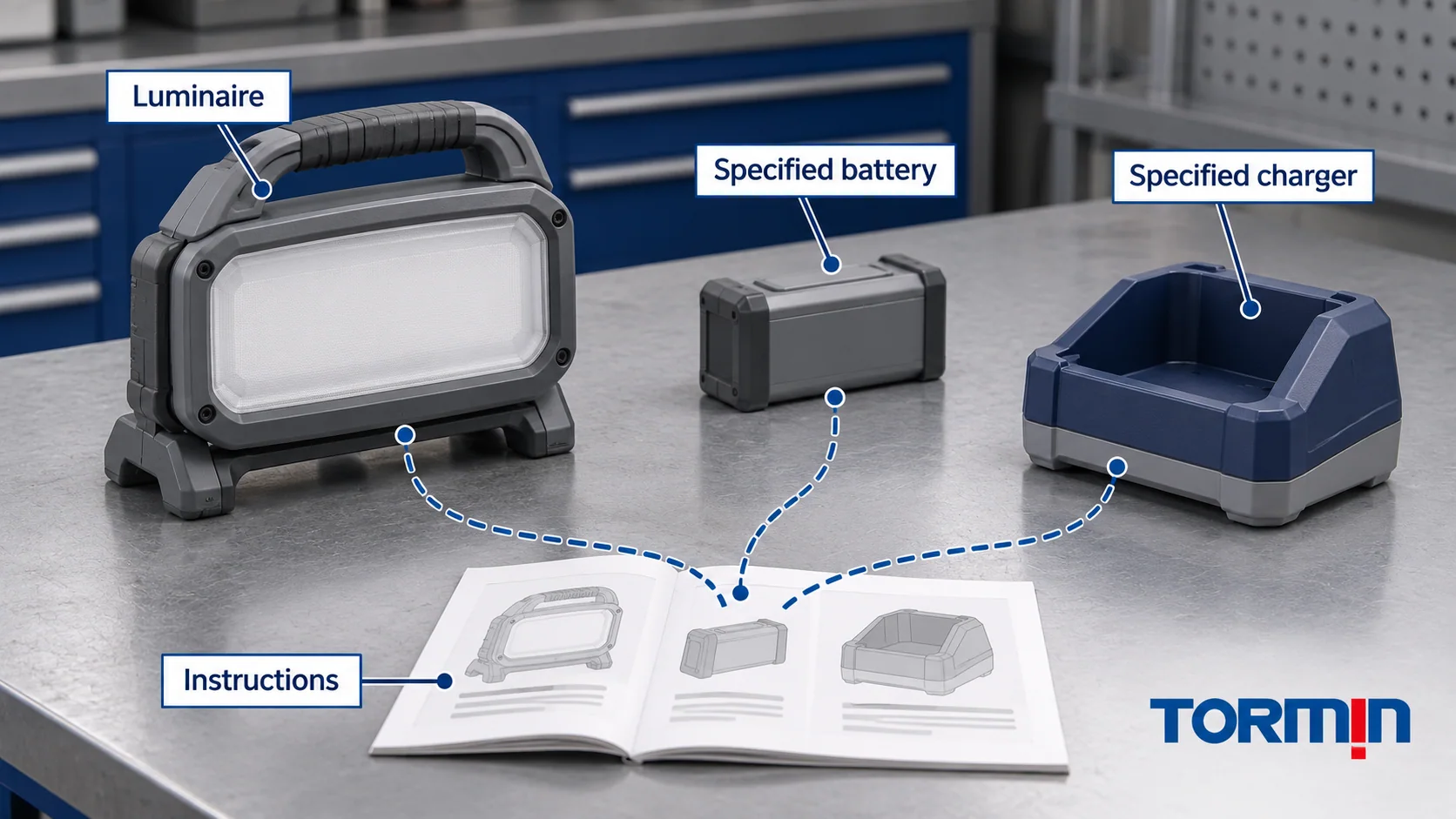
Keep that configuration consistent across the quotation, technical submittal and supplied equipment. If the supplier changes a battery, charger or connected accessory during order fulfilment, request the evidence for the revised arrangement before accepting the substitution.
Check operating, charging and service states separately
Permission to carry and operate a light in a classified location does not establish permission for every connected or service state. IEC 60079-11’s public scope explicitly includes equipment whose circuits are intrinsically safe only under certain conditions—for example, battery operation with the mains supply removed.
Use a short state schedule when comparing offers. Ask the supplier to identify the instruction or certificate condition supporting each proposed activity; do not leave a blank entry to mean “permitted.”
| Proposed state | Evidence to request | Record in the purchase specification |
|---|---|---|
| Operating from the fitted battery | Conditions covering the offered light and battery configuration | Permitted locations, ambient conditions and any relevant operating-mode restrictions |
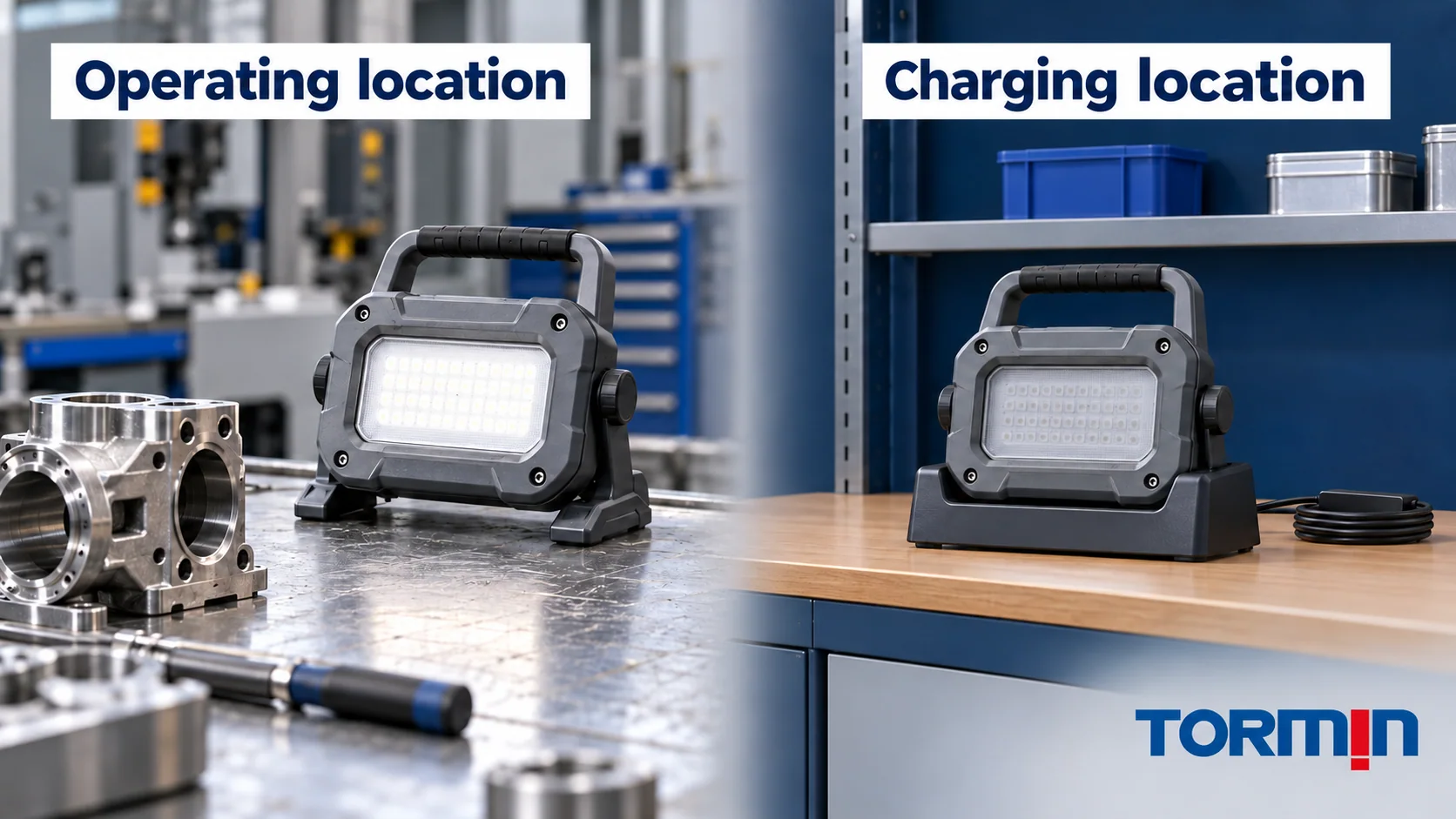
| Charging or sitting in a powered dock | Charger identity and documented charging conditions | Designated charging location, supply requirements and applicable restrictions |
| Replacing a battery or opening a battery compartment | Whether user replacement is permitted and the manufacturer’s conditions | Permitted replacement identity, location and service responsibility |
| Operating while externally powered or connected to an accessory | Evidence covering that connected arrangement | Whether the proposed connection is permitted during the intended use |
This is a procurement evidence schedule, not a battery-changing, charging or repair procedure. For the BW7101A/B certificate example above, the charging-location entry already has a specific restriction. Another product must be checked against its own documents.
Output and runtime enter this review only to define the configuration being purchased. If an offer gives several lighting modes, ask which mode supports the quoted runtime and whether it covers the required task period. A long runtime from one mode and a high output from another should not be combined into one purchasing promise. The portable-light selection page covers series and task-pattern comparisons.
Turn incomplete offers into comparable specifications
Consider two illustrative quotations. Offer A says “intrinsically safe rechargeable work light” but identifies no exact battery or charging conditions. Offer B states a complete model and mixed protection marking, with a certificate schedule and charging restriction. The two descriptions are not enough to establish interchangeability. Offer A needs its protection scope substantiated; Offer B still needs to match the project’s required approval, location and intended states.
The outcome of this review is a list of evidence gaps, followed by acceptance or rejection against the project requirement.
Use the following focused request with suppliers:
Please identify the complete portable-light ordering designation and the approval basis required for our stated location. Confirm whether intrinsic safety covers the complete apparatus or an identified circuit within a combined-protection design. Identify the permitted battery or cells, charger and proposed connected accessories, with the supporting document references. State the conditions for battery operation, charging, external-power operation and battery replacement where applicable. Identify the lighting mode used for the offered task output and runtime, and list any proposed deviations from our requirement.
For an IECEx offer, check the controlled online certificate record as part of the document review. IECEx explains that its online system holds the master version and that certificate status can change; the date printed on a saved PDF alone does not confirm today’s status.
When approaching TORMIN, send the location’s approval requirements, intended operating states and required task mode with your enquiry. Request the exact configuration documents for review before choosing from the portable-light range. That gives the supplier a defined configuration to substantiate and gives procurement a consistent basis for comparing offers.
Sources
- IEC — IEC 60079-11:2023, Equipment protection by intrinsic safety “i” — public scope, including conditional battery-only operation; the full standard was not used here.
- OSHA — 29 CFR 1910.399, Definitions applicable to this subpart — US definition of explosion-proof apparatus.
- SGS Baseefa — A brief introduction to Explosion Protection and Certification, BAS-PS-011, Issue 3, May 2025 — protection principles, configuration dependencies and battery-powered versus externally supplied IS equipment.
- OSHA — 29 CFR 1910.307, Hazardous (classified) locations — US location-specific approval and separate protection techniques.
- SGS Baseefa — Flameproof Equipment Design and Certification, BAS-PS-024, Issue 3, May 2025 — enclosure principles and dependence on the assessed equipment construction.
- TÜV Rheinland / IECEx — IECEx TUR 19.0062X, Issue 1, 24 September 2025 — dated BW7101A/B certificate and schedule supporting the combined-protection example and its use conditions; procurement review must check the controlled record for the offered variant.
- IECEx — Certified Equipment Scheme overview — complete-equipment and component certification scope.
- IECEx — F.A.Qs about IECEx — controlled online certificate records and the status of saved copies.